
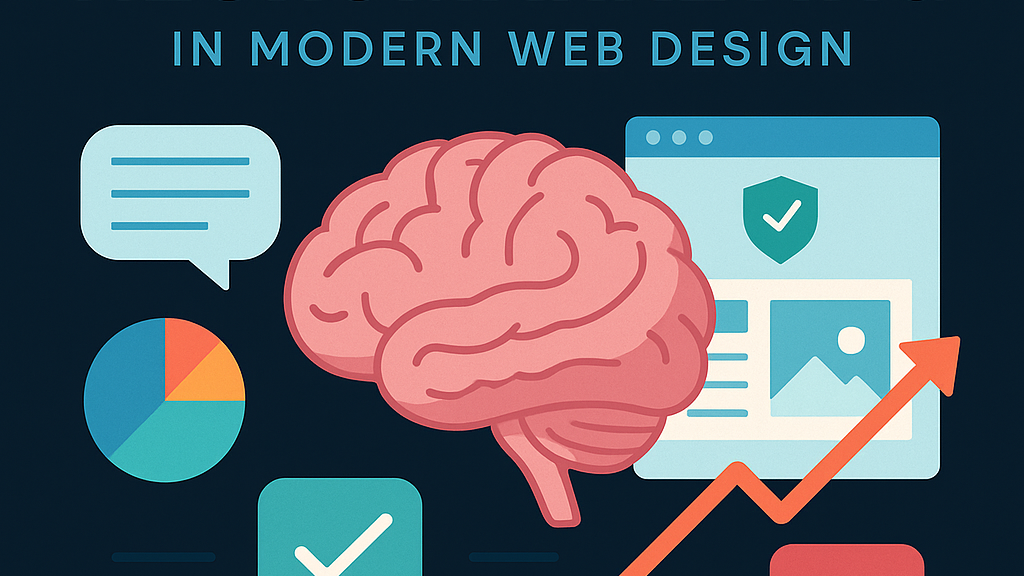
In the age of AI and endless scrolling, your website has milliseconds to make an impact. But here’s the twist: it’s not logic that drives most online decisions — it’s emotion.
That’s where neuromarketing steps in.
Neuromarketing blends brain science and design thinking to understand how and why users make choices. By tapping into subconscious responses — like how we react to colors, spacing, and motion — we can design websites that feel intuitive, trustworthy, and impossible to ignore.
Design is no longer just about pixels.
It’s about perception, emotion, and psychology.
Here’s how modern websites are using neuromarketing to create smarter, more human digital experiences:
People associate colors with feelings.
Heatmaps and eye-tracking studies reveal how users scan a page — usually in F or Z patterns. Neuromarketing uses this data to place CTAs and headlines exactly where they’ll get noticed.
The brain hates chaos. Simple, clean designs reduce cognitive load and help users focus on what matters most: your message.
Before users read a word, they feel the site. Subtle cues like white space, testimonials, or even a secure lock icon tell their brain: “You’re safe here.”
From hover effects to scroll animations, small touches create emotional satisfaction — a key to higher engagement.
Neuromarketing isn’t about manipulation.
It’s about connection.
At Plenty of Pixels, we combine neuroscience, strategy, and creativity to build digital experiences people actually love — and remember.
📍 Ready to design for the brain, not just the browser?
Visit https://plentyofpixels.com to get started.

